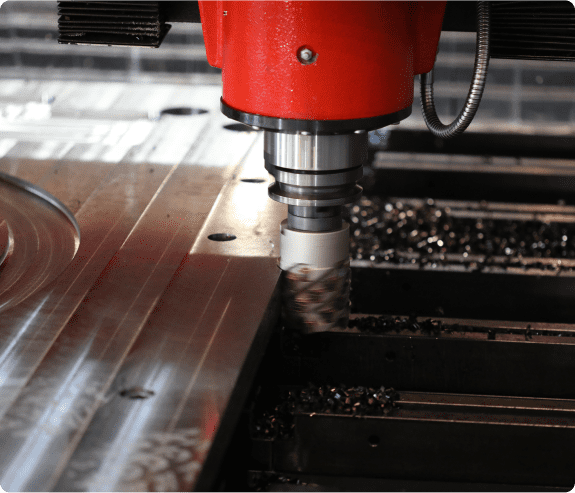
Machine Tools
Machine tools are integral in the process of creating precision parts and products. They play a crucial role in industries like metalworking, automotive, aerospace, defense, shipyards, and steel construction, where the fabrication of complex and intricate parts is necessary.
Each machine tool is tailored to fulfill specific tasks, varying according to the nature of the work being performed. This range includes lathes, used for precise shaping and finishing of workpieces; shapers and metal planers, utilized for creating flat and contoured surfaces; drilling machines, for creating holes; milling machines, used to remove material from workpieces; grinding machines, for smoothing and finishing surfaces; to shape workpieces under vertical machining centers, multi-axis machines capable of milling, drilling and tapping
In the steel fabrication industry, the requirement for machine tools is prominent in various operations. By aligning with the specific needs of steel fabricators, our machines don't just perform tasks, but form the cornerstone of a smooth, efficient, and profitable manufacturing operation.
Whether it is for profile and plate processing needs or more specialized applications, our diverse array of machine tools serve as the backbone of your manufacturing process, transforming raw materials into high-quality products with optimal efficiency and precision.
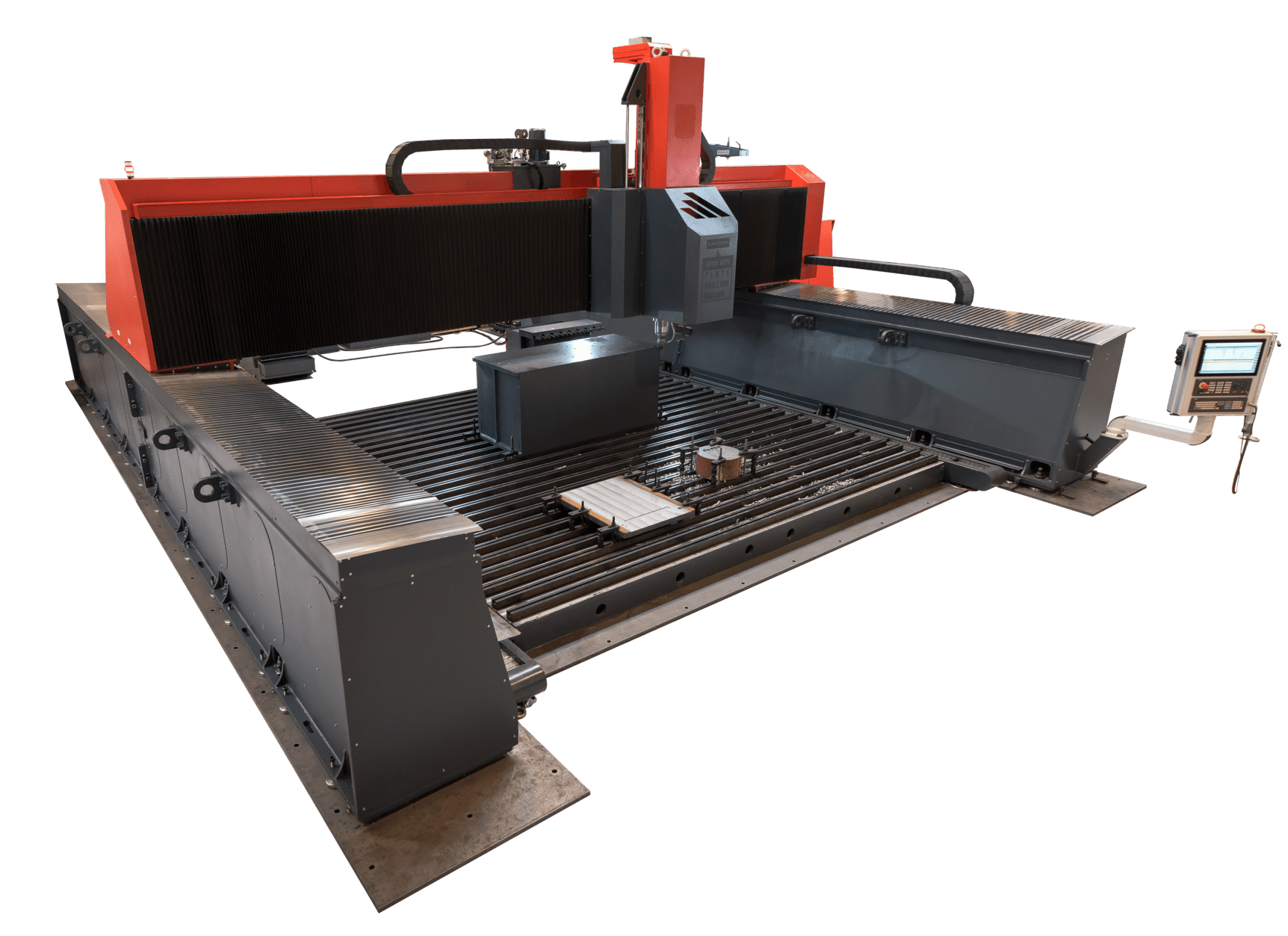

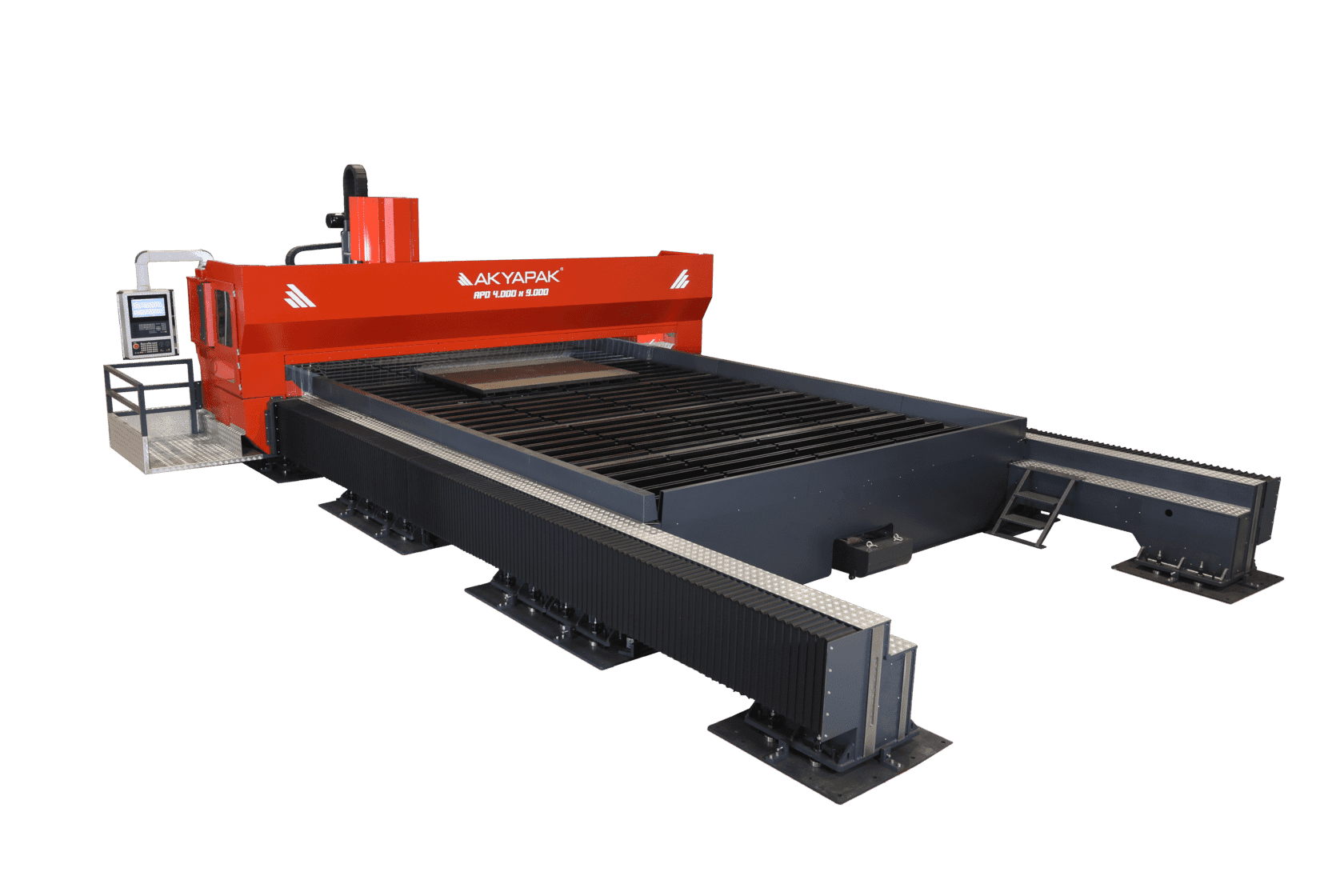
Milling
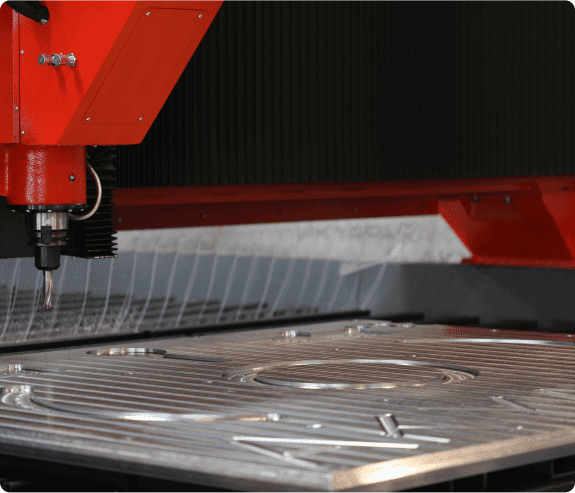
Milling is an industrial machining process where a rotary cutting tool, usually in the form of a bit, removes material from a workpiece by moving around its own axis. The tool tip, which is equipped with sharp inserts or 'bits', performs the milling operation. Depending on the orientation of the spindle that the tool is attached to, milling machines are categorized as either horizontal or vertical. Horizontal milling machines are used when the tool's spindle is aligned horizontally, while vertical milling machines are used when the spindle is vertically oriented.
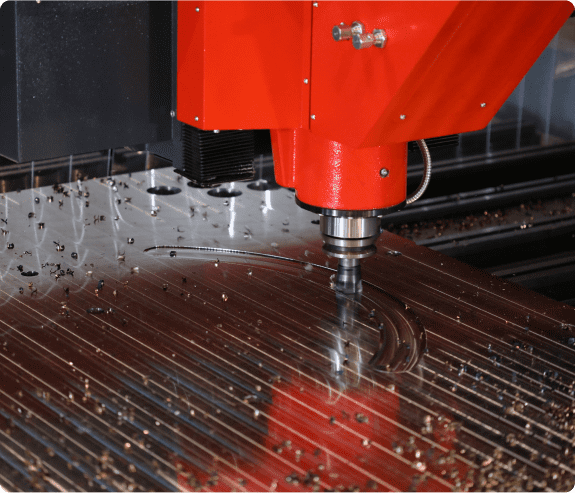
Drilling
The drilling process is a machining operation where specific inserts on the spindle are used to create holes in the surface of a workpiece. These drilled holes can subsequently be used to secure fasteners such as bolts or screws. The drilling process can vary depending on the diameter of the hole required, depth, and the material of the workpiece.
Bits
Various tools are employed to achieve specific results in milling operations. Two common types are face milling and end milling tools, which utilize their ends and sides simultaneously to remove material and create grooves or steps in the workpiece. Additional tools such as carbide end mill, HSS end mill, form mill, and surface mill can also be used, offering versatility and flexibility in milling applications. These tool bits are designed to withstand high-speed machining without losing their effectiveness or precision.